Waterfront Homes
What should I check about a seawall and dock before buying a Cape Coral home on the water?
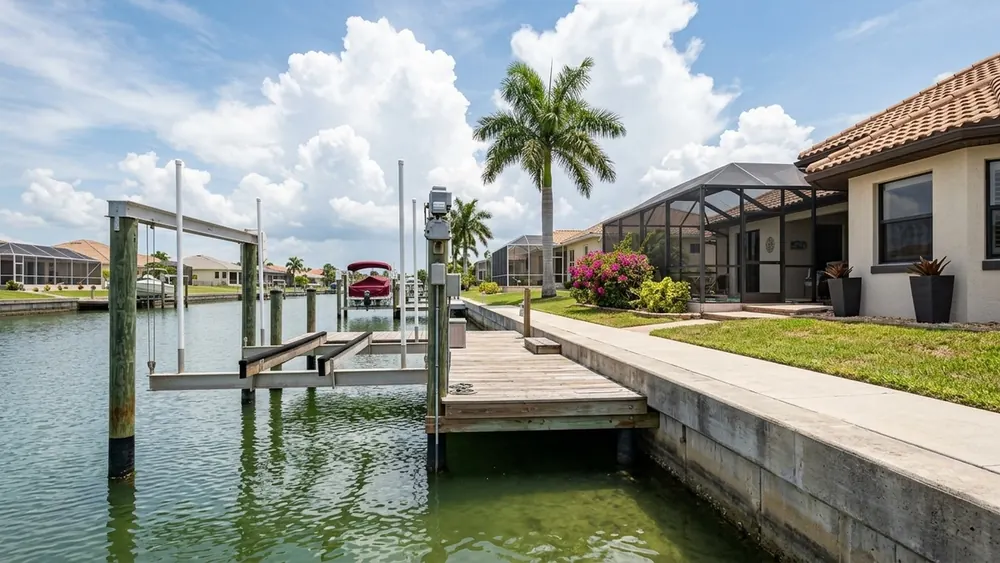
Before buying a Cape Coral home on the water, check the age and condition of the seawall, dock and any lift, the repair history, and whether permits were pulled. A marine professional assesses condition, and the City of Cape Coral holds permit records.
On this page
The short answer on seawalls and docks
Before you buy a Cape Coral home on the water, find out the age and condition of the seawall, the dock and any boat lift, ask what repairs have been done, and confirm whether permits were pulled for that work. Then have a qualified person look at all of it. A marine professional or marine contractor can assess condition, and the City of Cape Coral holds the permit records. Do this before you commit, not after.
Here is why it matters. The seawall holds the edge of the lot against the canal, and the dock and lift are how you actually use the water. They are physical structures, exposed to weather and water every day, and their condition can vary a lot from one home to the next. A house can show beautifully and still have a seawall or dock that needs attention. You want to know which one you are looking at.
This article walks through what to check, in what order, and who gives the official answer. It does not give repair costs, lifespans, permit rules or insurance figures. Those vary by property and change over time, so every specific answer belongs with the City of Cape Coral, a marine professional, a licensed home inspector or a licensed insurance agent. Think of this as the question list you bring to them.
Why the seawall comes first
Start with the seawall, because it supports everything else on the water side of the lot. The dock and lift sit on or beside it, and the yard sits behind it. Look at it yourself first. Walk its length and look for cracks, leaning, gaps, or soil washing out behind it. You are not diagnosing anything. You are building a list of things to point out to the professional who will look at it properly.
Then ask the seller side for whatever records exist. When was the seawall built or replaced? Has any section been repaired, and by whom? Were permits pulled for that work? Records do not replace an inspection, but they tell you where to look and what to ask. A seller who has kept clear records often makes this part of the conversation much easier for everyone involved.
Finally, ask a marine professional or marine contractor to assess the seawall’s condition, and ask the City of Cape Coral what permit records exist for the property’s seawall and dock. Between the two, you get a picture of what is there now and what work was approved in the past. Neither one is a guarantee about the future, but together they tell you far more than the listing photos can.
What to look at on the dock and lift
The dock is the part of the water side you will use most, so look at it the way you would look at a deck on a house. Check the boards, the posts, the fasteners and any railings. Notice what feels soft, loose or uneven underfoot. Look at any electrical or water hookups on the dock and ask whether they work. Take photos as you go, so you can show the professional exactly what caught your eye.
If there is a boat lift, ask about its age, its condition and whether it has been serviced. Ask what size and type of boat it was set up for, and compare that with the boat you own or plan to own. A lift that suits one boat may not suit another. Ask whether the motor and controls run, and plan to have someone qualified look at the lift as part of the water-side review.
Docks and lifts involve permits too. Ask whether the dock and lift were permitted when they were built or changed, and confirm that with the City of Cape Coral. If you are thinking about adding or changing a dock or lift after you buy, ask the city what that process looks like before you count on it. Rules for docks and lifts are something to confirm, never something to assume from a listing or a neighbor’s setup.
Records worth asking for up front
Paperwork is the less visible half of this homework. Before you make an offer, ask for whatever records the seller has on the water side of the property. Not every home will have all of them, and that is useful information too, because gaps in the records tell you where an inspection needs to look harder. Here are the records worth requesting, along with anything else the seller can share about past work.
- The date the seawall was built or last replaced, with any repair history
- Permit records for seawall, dock and lift work, both past and recent
- Receipts or contracts from the marine contractors who did any of that work
- Service records for the boat lift, including the last time it was checked
Once you have the records, line them up against what you saw on your walk and what the professionals report. Where they agree, you can move forward with more confidence. Where they disagree, such as repairs with no permit record or a seawall that looks older than the paperwork suggests, ask more questions. The City of Cape Coral and a marine professional are the people who can settle those differences, not the listing.
Who answers each seawall question
Julie can help you build the question list and keep it in order, but each answer has an owner. The table below lays out the main questions about a seawall and dock, why each one matters, and who gives the official answer. Use it as a checklist. Write down each answer, who gave it and the date, so you are comparing homes on facts you collected rather than on memory.
| Question | Why it matters | Who to ask |
|---|---|---|
| What condition is the seawall in | It supports the yard, the dock and the lift | A marine professional or marine contractor |
| Were permits pulled for past work | Unpermitted work can raise questions later | The City of Cape Coral |
| What condition are the dock and lift in | They are how you actually use the water | A marine professional and a licensed home inspector |
| What route does the canal take | The route decides which boats can use it | The City of Cape Coral or a marine professional |
| How does the water affect coverage | Insurance can change what the home really costs | A licensed insurance agent |
Notice that the insurance question sits in the same table as the seawall. That is on purpose. Talk with a licensed insurance agent before you settle on an offer, and ask how the water side of the property affects coverage. Share what you learned about the seawall and dock. Check official flood maps and ask about flood coverage directly. This article names no premiums or carriers, because they vary by home and change.
Assumptions that lead to surprises
The most common assumption is that a seawall or dock that looks fine in photos is fine. Photos are taken to sell a home. They rarely show the base of a seawall, the underside of a dock or the inside of a lift motor. Another common assumption is that a recent repair means the whole structure is new. A repaired section is a repaired section. Ask what was done, where, and whether it was permitted.
A third assumption is that a general home inspection covers the water side. Some inspectors look at docks and seawalls and some do not, so ask before you book. If the home inspector does not cover them, plan a separate review by a marine professional. And do not assume you can change a dock or lift later without checking first. Confirm any plans with the City of Cape Coral before they shape your offer.
Your seawall and dock checklist
Before you make an offer on a Cape Coral home on the water, work through a short list. Keep it in the same order for every home, so you are comparing like with like. What checked out on the last house tells you nothing about this one, because every seawall, dock and lift has its own history. Here is the order to follow, from your own walk to the insurance call.
- Walk the seawall, dock and lift yourself and photograph anything that looks off
- Request records on construction, repairs, permits and lift service from the seller
- Book a marine professional to assess the seawall, dock and lift condition
- Confirm permit records with the city and talk with a licensed insurance agent
If you are looking at a home on the water and want help putting these questions in order, bring the listing and your notes to Julie. You can work through what to verify first, who to call for each answer, and what to ask the seller before an offer goes in. Here is a place to start: when was the seawall behind the home you are watching last looked at, and by whom?
This article is general information about buying and selling property in Cape Coral and Lee County, Florida. It is not legal, tax, insurance, lending, valuation or inspection advice and does not predict prices or promise results. Confirm insurance with a licensed insurance agent, water routes, docks, seawalls and permits with the City of Cape Coral and a marine professional, condition with a licensed inspector, homestead and taxes with the Lee County Property Appraiser and Tax Collector, and financing with a lender. Julie Kubic, Starlink Realty, Inc.

Written by