Waterfront Homes
How is selling a Cape Coral waterfront home different from selling an inland one?
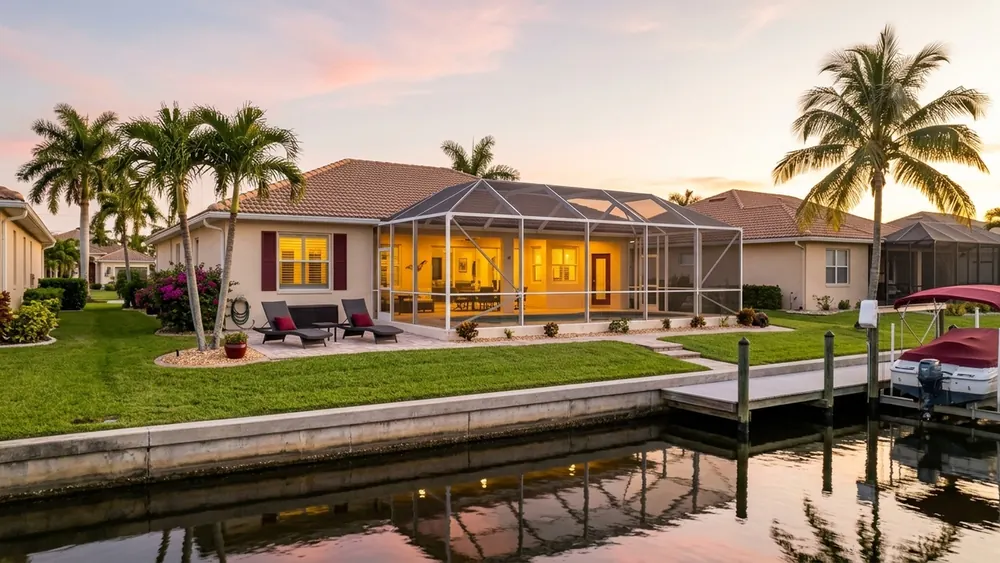
Selling a Cape Coral waterfront home adds a second set of buyer questions: the water route, the seawall, the dock and lift, and how the water affects insurance. Prepare records and accurate answers for those before you list, alongside the house itself.
On this page
How waterfront selling differs from inland
Selling a Cape Coral waterfront home is different from selling an inland one because buyers are weighing two things: the house and the water. An inland buyer asks about the roof, the systems, the pool and the yard. A waterfront buyer asks all of that, then asks about the route to open water, the seawall, the dock, any lift, and how the water affects insurance. Your preparation needs to cover both sets of questions.
Here is why it matters. The water side is often a large part of what a waterfront buyer is weighing, and it is also where many of their worries sit. A buyer who cannot get clear answers about the seawall or the route may slow down, ask for more time, or move on to another home. A seller who has those answers ready makes it easier for a careful buyer to keep going.
This article covers what changes when you sell on the water, what to gather before you list, and who gives the official answers. It makes no promises about price, timing or results, and it gives no market figures. Values and conditions vary by property and change over time. The aim is to help you prepare the home and the paperwork so a buyer’s questions have somewhere to land.
Buyers are checking the water too
Think about what a careful waterfront buyer will do. They will ask what gulf access or direct access means for your specific home. They will walk the seawall, look at the dock and test the lift. Their insurance agent will ask about the property, and they may look at official flood maps. They may bring a marine professional along. Every one of those steps is a question you can prepare for before your home is on the market.
That does not mean you should answer every water question yourself. Generally, you should not. Route, dock and seawall questions belong with the City of Cape Coral and a marine professional, and insurance questions belong with a licensed insurance agent. Your job as a seller is to have records ready, describe the property accurately, and point buyers toward the right sources. That keeps everyone honest and keeps the conversation moving.
On the water, buyers are checking two things, the house and the route. If your seawall and dock records are ready before you list, you give careful buyers a reason to keep going.
Get your water-side records in order
Start gathering water-side records before you list, not when a buyer asks. Look for anything that shows when the seawall was built or replaced, what repairs were made and by whom, and whether permits were pulled. Do the same for the dock and any boat lift, including service records. If you are not sure what permits exist, ask the City of Cape Coral what records it holds for the property.
Gaps in your records are worth knowing about early. If a repair was done without a permit, or you cannot find paperwork for an older dock, ask the City of Cape Coral what options exist and talk with a real estate attorney about anything legal. Disclosure questions go to official Florida sources and to that attorney, not to guesswork. Finding a gap before you list gives you time to decide what to do about it.
Consider having a marine professional look at the seawall, dock and lift before you list. A pre-listing review shows you what a buyer’s professional is likely to find, and gives you time to decide whether to repair, disclose or adjust. It also gives you something concrete to share. You are not promising the buyer anything with it. You are showing that you looked, and that the water side is not being hidden.
Why inland homes skip a whole layer
An inland Cape Coral home still has plenty to prepare. Buyers ask about the roof, the air conditioning, the plumbing, the electrical, the pool and the enclosure if there is one, and how the home affects insurance. Records and a clean, well-kept house matter there too. The difference is that an inland seller does not have a seawall, a dock, a lift or a water route for a buyer to question.
So the waterfront seller has everything the inland seller has, plus a second layer. That layer involves different professionals, different records and more questions from buyers. It also means more ways for a sale to stall if the answers are not ready. Preparing the water side is not about dressing the home up. It is about making sure a careful buyer can find what they need to know without guessing.
Presenting the water side honestly
Presentation on the water starts with accuracy. Describe the water access in words the facts support, and let buyers verify the route themselves with the city and a marine professional. Show the dock, lift and seawall clearly in photos, and show them as they actually are. Then make the practical details easy to find. A short list of what you have ready can help buyers move through their own homework.
- Records of seawall construction, replacement and repairs, with permit details where available
- Dock and boat lift details, including age, service history and the boat it suits
- Recent receipts for roof, air conditioning and pool equipment work on the house
- A plain note on the water access the listing describes and how to verify it
Keep the water access description factual. Gulf access usually means a canal route to open water, and direct access usually means a route without fixed bridges, but the route for your home is something buyers should confirm with the city or a marine professional. Do not describe the trip, the boats it suits or anything about the route you have not confirmed. Clear, modest descriptions hold up well once a buyer starts checking.
Waterfront and inland preparation side by side
The table below compares what to prepare for a waterfront sale and for an inland sale. It is not a complete list, and every home is different. Use it to see where the extra waterfront work sits, so you can start on it early. Sort which items matter most for your home and put them in a sensible order before you list, so nothing important waits until a buyer asks for it.
| Item | Waterfront home | Inland home |
|---|---|---|
| Seawall records | Gather age, repair history and permit records | Not applicable |
| Dock and boat lift | Gather age, service history and permit records | Not applicable |
| Water access description | Describe accurately and let buyers verify the route | Not applicable |
| Roof, systems and pool | Gather records and recent receipts | Gather records and recent receipts |
| Insurance questions | Expect buyers to ask early | Expect buyers to ask early |
Look at the last two rows. Both kinds of sellers face questions about the house itself and about insurance. Buyers in Cape Coral ask early about insurance and condition, and clear records can make those conversations easier. The first three rows are where the waterfront work adds up. If you are selling on the water, start with those items first, because they involve outside professionals and can take time to arrange.
Pricing a home on the water
Pricing a waterfront home starts the same way as pricing any Cape Coral home: with recent comparable sales nearby, then current inventory, days on market and condition. Water access adds another layer. Two waterfront homes can differ a great deal in route, seawall condition and dock setup, and those differences matter when you compare them. A comparable sale is only useful if you understand what was actually on its water side.
Julie can walk you through each comparable sale and what it does and does not tell you before a price is set. No price or timeline is promised, and conditions change, so any figures you rely on should be current and dated. If you see price cuts on other waterfront listings, ask what those homes had or lacked on the water side. That answer often tells you more than the number itself does.
What to do before you list
Before you list your Cape Coral waterfront home, gather your seawall, dock and lift records, check permit records with the City of Cape Coral, and consider a pre-listing look from a marine professional. Pull together receipts for the roof, systems and pool. Write down what water access your home has, in plain words, and note anything you are unsure about. That list becomes the starting point for preparing the home and the listing.
If you are thinking about selling a home on the water and want to talk through what to prepare, bring your records, or your questions about missing ones, to Julie. You can sort out together what to gather first, what to have a professional look at, and how to describe the water side accurately. So, as a first step: which records do you have for your seawall and dock today?
This article is general information about buying and selling property in Cape Coral and Lee County, Florida. It is not legal, tax, insurance, lending, valuation or inspection advice and does not predict prices or promise results. Confirm insurance with a licensed insurance agent, water routes, docks, seawalls and permits with the City of Cape Coral and a marine professional, condition with a licensed inspector, homestead and taxes with the Lee County Property Appraiser and Tax Collector, and financing with a lender. Julie Kubic, Starlink Realty, Inc.

Written by